Wednesday, August 02, 2006

Billionaires who get too big for their boots


Adnan Khashoggi
From Wikipedia, the free encyclopedia
Jump to: navigation, search

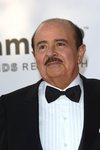
Adnan Khashoggi (or Kashoggi) (Arabic:عدنان خاشقجي)(born 25 July 1935) is a billionaire Saudi arms-dealer and businessman, and was involved in the Iran-Contra Affair.
Contents
[hide]

* 1 History
* 2 Trivia
* 3 See also
* 4 External links

[edit]

History

Kashoggi is the son of Muhammad Khashoggi a medical doctor, and was educated in Victoria College in Alexandria in Egypt, California State University, Chico, and Stanford University in Palo Alto, California, USA. He is Turkish by descent.

It is said that Kashoggi quit his studies in order to seek his fortune in business. Khashoggi headed a company called Triad Holding Company, which amongst other things built the Triad Centre in Salt Lake City, Utah, which later went bankrupt. He was famed as an arms dealer, brokering deals between US firms and the Saudi Government, most actively in the 1960s and 1970s. Among his overseas clients were defense contractors Lockheed Corporation (now Lockheed Martin Corporation), Raytheon, Grumman Aircraft Engineering Corporation and Northrop Corporation (which have now merged into Northrop Grumman). A shrewd businessman, he covered his financial tracks by establishing front companies in Switzerland and Liechtenstein to handle his commissions (bribes) as well as developing contacts with notables such as CIA agents James H. Critchfield and Kim Roosevelt and US businessman Bebe Rebozo, a close associate of former US President Richard Nixon.

Among Kashoggi's activities reported in the news was a reported $1 billion 1980 divorce settlement paid to his ex-wife Soraya. He was also implicated in the Iran-Contra Affair as a key middleman in the arms-for-hostages exchange along with Iranian arms dealer Manucher Ghorbanifar, and in a complex series of events, was found to have borrowed money for these arms purchases from the near-infamous and now-bankrupt financial institution the Bank of Credit and Commerce International with Saudi and US backing. In 1988, Kashoggi was arrested in Switzerland, accused of concealing funds, and held for three months and then extradited to the United States where he was released on bail and subsequently acquitted. Since then he has kept a low profile, last resurfacing in 1992 to mediate for Col. Ghaddafi of Libya his investment in the United Kingdom Metropole Hotels.
[edit]

Trivia

* Khashoggi was well known for leading an extravagant and wild lifestyle that was legendary in its time. This was commemorated on rock band Queen's album The Miracle, on which the second song is titled Khashoggi's Ship. The song mentions his super yacht "Nabila" built by Benetti

* Army of lovers band featured Khashoggi in its song La Plage De Saint Tropez with the following line: "We met Khashoggi with a gun".

* Harold Robbins´novel The Pirate (1974) is supposed to be inspired by the life and lifestyle of Khashoggi.

* Khashoggi's sister, Samira Khashoggi Fayed was the mother of Dodi Al-Fayed, friend of the late Princess Diana

* In his 50th birthday party, held in Marbella in Spain in 1985, said to have cost millions of dollars, he entertained celebrity guests such as Sean Connery, Shirley Bassey, Brooke Shields and George Hamilton IV.

* American University used to have a prominent building named the Khashoggi Center but after defaulting on his donation obligation, the school removed his name from the building.

* One of "his" daughters with ex-wife Soraya Khashoggi, turned out, on DNA testing at age 18, to be the daughter of UK Tory Cabinet Minister Jonathan Aitken, soon to be disgraced for his role in accepting a gift from another arms dealer, Mohammed Said Ayas, a Lebanese and a close associate of Prince Muhammad bin Fahd of Saudi Arabia. In his libel suit against the Guardian newspaper, Aitken perjured himself over this gift of accommodation at the Paris Ritz and went to jail.

[edit]

See also

* Ghaith Pharoan
* Ahmed Zaki Yamani
* Ramy El-Batrawi

[edit]

External links

* TIME Magazine Cover: Adnan Khashoggi Jan. 19, 1987
* Notes on The Richest Man In The World by Ronald Kessler ISBN 0446513393
* Profile at NNDB
* Death of a Princess
* Chapter Servants of the Crown from Saïd K. Aburish's The House of Saud ISBN 0747578745
* Did Adnan Khashoggi Throw the Election to Dubya?
* More "Six Degrees of Adnan Khashoggi"
* TSX member Deutsche Bank in major penny stock scandal article by Brent Mudry
* Banking units embroiled in lawsuit copy of a Globe and Mail article by Karen Howlett
* Why was Richard Perle meeting with Adnan Khashoggi? The New Yorker article by Seymour Hersh, March 2003.

Retrieved from "http://en.wikipedia.org/wiki/Adnan_Khashoggi"

Categories: 1935 births | American political scandals | Arms traders | Living people | Saudi Arabian businesspeople


Taken from: Adnan Kashoggi - Wikipedia


Malcolm Forbes
From Wikipedia, the free encyclopedia
Jump to: navigation, search

Malcolm Stevenson Forbes (August 19, 1919 – February 24, 1990) was publisher of Forbes magazine, founded by his father B.C. Forbes and today run by his son Steve Forbes. He is a graduate of the Lawrenceville School and Princeton University.
Contents
[hide]

* 1 Career
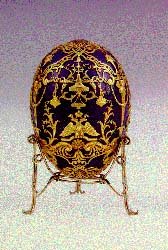
* 2 Fabergé
* 3 Trivia
* 4 See also

[edit]

Career

After dabbling in politics, including a term in the state legislature and candidacy for Governor of New Jersey, he committed to the magazine full time by 1957, three years after his father's death, and after the death of elder brother Bruce Charles Forbes in 1964 acquired sole control of the company.

The magazine grew steadily under his leadership, and he diversified into real estate sales and other ventures. One of his last projects was the magazine Egg, which chronicled New York's nightlife. (The title had nothing to do with Forbes's famous Fabergé egg collection.)

Malcolm Forbes was legendary for his lavish lifestyle, his private Capitalist Tool jet, ever larger Highlander yachts, huge art collection, substantial collection of Harley-Davidson motorbikes, his French Chateau (in Balleroy, Normandy), collection of special shape Hot air balloons and opulent birthday parties.

He chose the Palais du Mendoub (which he had acquired from the Moroccan government in 1970) in the northwestern city of Tangier, Morocco to host his 70th birthday party. Spending an estimated $2.5 million, he chartered a Boeing 747, a DC-8 and a Concorde to fly in eight hundred of the world's rich and famous from New York and London. The guests include his friend Elizabeth Taylor (who acted as a co-host), Gianni Agnelli, Robert Maxwell, Barbara Walters, Henry Kissinger, half a dozen US state governors, the CEOs of scores of multinational corporations likely to advertise in his magazine. The party entertainment was on a grand scale, including 600 drummers, acrobats and dancers and a fantasia - a cavalry charge which ends with the firing of muskets into the air - by 300 Berber horsemen.

Forbes was outed as a gay man in the late 1980s by the gay political group, ACT-UP. He died suddenly in 1990. The exact nature of his death is unsure.
[edit]

Fabergé

The nine Fabergé eggs he acquired were scheduled to be auctioned in April 2004 by Sotheby's, with a pre-sale estimate that they would sell for an average of US$10 million apiece. However, Russian oil magnate and art collector Victor Vekselberg made a deal in February to buy the entire collection for $100 million.
[edit]

Trivia

* Malcolm Forbes became a motorcyclist late in life. He rode with a motorcycle club called the Capitalist Tools. His estate in New Jersey was a regular meeting place for tours that he organized for fellow New Jersey and New York motorcyclists. He had a stable of motorcycles but was partial to Harley Davidson machines. He was known for his gift of Purple Passion, a Harley-Davidson, to actress Elizabeth Taylor. He was also instrumental in getting legislation passed to allow motorcycles on the cars-only Garden State Parkway in New Jersey.

[edit]

See also

* Forbes family (publishers)


Taken from: Malcolm Forbes - wikipedia

The Bush Family


The Project for the New American Century is a non-profit educational organization dedicated to a few fundamental propositions: that American leadership is good both for America and for the world; and that such leadership requires military strength, diplomatic energy and commitment to moral principle.

The Project for the New American Century intends, through issue briefs, research papers, advocacy journalism, conferences, and seminars, to explain what American world leadership entails. It will also strive to rally support for a vigorous and principled policy of American international involvement and to stimulate useful public debate on foreign and defense policy and America's role in the world.

William Kristol, Chairman

Project For The New American Century


Supported by none other than Jeb Bush and a large number of George Bush's cabinet (new and ex members)


Prescott Bush - Investor in Nazi Germany


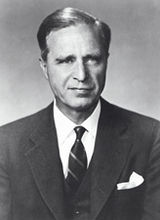
Prescott Bush
From Wikipedia, the free encyclopedia
Jump to: navigation, search
Prescott Sheldon Bush
Senator (Class 2,)
Connecticut
Term of office:
November 4, 1953—
January 2, 1963
Political party:
Republican
Preceded by: William A. Purtell
Succeeded by: Abraham A. Ribicoff
Born: May 15, 1895
Columbus, Ohio
Died: October 8, 1972
New York City
Spouse: Dorothy Walker Bush

Prescott Sheldon Bush (May 15, 1895 — October 8, 1972) was a United States Senator from Connecticut and a Wall Street executive banker with Brown Brothers Harriman. He is the father of former president George H.W. Bush and the grandfather of current President George W. Bush.
Contents
[hide]

* 1 Early life
o 1.1 Military service
* 2 Business career
* 3 Political career
* 4 War seizures controversy
* 5 Writings
* 6 Further reading
* 7 External links

[edit]

Early life

Bush was born in Columbus, Ohio to Flora Sheldon and Samuel Prescott Bush, a railroad executive, and later, steel company president and during World War I, a federal government official in charge of coordination and assistance to major weapons contractors.

Bush attended the Douglas School in Columbus and then St. George's School in Newport, Rhode Island from 1908 to 1913. In 1913, he enrolled at Yale University, starting a family tradition of higher education, as his son, George H.W. Bush, his grandson, George W. Bush, as well as his great-granddaughter Barbara are all Yale alumni. Prescott Bush was admitted to the Zeta Psi fraternity while at Yale, though two of his sons and grandson would opt for Delta Kappa Epsilon. All four Bushes, however, would be members of the Skull and Bones secret society (along with several Walkers), and Bush has long been implicated in the society's alleged theft of the skull of Native American leader Geronimo, when three Bonesmen were stationed at Fort Sill.[1] Some historians, and Cecil Adams, regard this claim as false.

Prescott Bush played varsity golf, football, and baseball, and was president of the Yale Glee Club, and, in fact, was regarded as the best close-harmony man in the class of 1917. His strong devotion to singing at Yale became another of his passions, as evidenced by his founding of the Yale Glee Club Associates, an alumni group, in 1937.

He maintained homes in Long Island, New York and Greenwich, Connecticut; the family compound at Kennebunkport, Maine; a 10,000 acre (40 km²) plantation in South Carolina; and an island retreat in Florida.
[edit]

Military service

After graduation, Prescott Bush served as a field artillery captain with the American Expeditionary Forces (1917-1919) during World War I. He received intelligence training at Verdun, France, and was briefly assigned to a staff of French officers. Alternating between intelligence and artillery, Captain Bush came under fire in the Meuse-Argonne offensive. Controversially, Prescott Bush wrote home about receiving medals for heroic exploits. His letters were later published in Columbus newspapers, but were retracted a few weeks later when it was revealed that he, in fact, had not received such medals. The retraction was made in a cable in which Prescott Bush stated that his earlier letter had been written "in a spirit of fun" and was not intended for publication.
[edit]

Business career

After his discharge in 1919, Prescott Bush went to work for the Simmons Hardware Company in St. Louis, Missouri.

On August 6, 1921, in Kennebunkport, Maine, he wed Dorothy Walker, the daughter of George Herbert Walker (who would be the namesake of Prescott Bush's second son, George Herbert Walker Bush). They would have four other children: Prescott Bush, Jr., Jonathan Bush, William H.T. Bush, and Nancy Bush.

Among those attending the wedding ceremony were Isabel Stillman Rockefeller (daughter of Percy Rockefeller), Hope Lincoln, Mary Keck, Elizabeth Trotter, Martha Pittman, Ruth Lionberger, Nancy Walker, George Herbert Walker, Knight Wooley, Frank Shephard, John Shepley, Richard Bentley, Henry Isham, William Potter Wear, and Henry Fenimore Cooper.

The Bushes moved to Columbus, Ohio, in 1923, where Prescott Bush went to work for the Hupp Products Company, where his business efforts generally failed. He left in November, 1923 to become president of sales for the Stedman Products company of South Braintree, Massachusetts. In 1925, he joined the United States Rubber Company of New York City as manager of the foreign division, and moved to Greenwich, Connecticut.

From 1944 to 1956, Bush was a member of the Yale Corporation, the principal governing body of Yale University. Bush was on the board of directors of CBS, having been introduced to chairman William Paley around 1932 by his close friend and colleague Averell Harriman, who became a major Democratic party power-broker.
[edit]

Political career

Bush was a typical New England Republican of his time; as a former banker, he was pro-business, but held many positions today considered socially liberal. He was often asocciated with moderate and liberal Republicans. Later he would be identified with the "Rockefeller Republicans" (1), although this was inaccurate since Bush was a moderate conservative who supported Goldwater and opposed Rockefeller. Extreme right-wing elements of the party distrusted and at times openly opposed him, a pattern that has continued with his son and grandson.

Bush was involved with the American Birth Control League as early as 1942, and served as the treasurer of the first national capital campaign of Planned Parenthood in 1947. Bush was also an early supporter of the United Negro College Fund, serving as chairman of the Connecticut branch in 1951.

From 1947 to 1950 he served as Connecticut Republican finance chairman, and was the Republican candidate for the United States Senate in 1950. The ties with Planned Parenthood hurt him in heavily Catholic Connecticut, and were the basis of a last-minute smear campaign in churches by Bush's opponents; the family vigorously denied the connection, but Bush lost to Democrat William Benton by only 1,000 votes.

In 1952 he was elected to the United States Senate, defeating Abraham Ribicoff for the vacant seat which was caused by the death of James O'Brien McMahon. A staunch supporter of President Dwight D. Eisenhower (another golf aficionado), Prescott Bush served until January, 1963.

Bush's moderate politics became more complicated in time. He disliked Nelson Rockefeller despite the close relationship his father Samuel P. Bush had with the Rockefeller family and his own friendship with Nelson's cousin Percy, and when Nelson divorced his first wife and remarried to a woman about twenty years his junior with whom he had been having an adulterous relationship while married to his first wife, causing an infidelity scandal that hurt his campaign for the 1964 Republican nomination for President, Bush denounced Rockefeller for his behavior[1]. Bush enthusiastically supported ultra-conservative Senator Barry M. Goldwater against Rockefeller and during the general election campaign. He liked Goldwater's book the The Conscience of a Conservative and recommended it to his son.
[edit]

War seizures controversy

Harriman Bank was the main Wall Street connection for German companies and the varied U.S. financial interests of Fritz Thyssen, who had been an early financial backer of the Nazi party until 1938, but who by 1939 had fled Germany and was bitterly denouncing Hitler. Dealing with Nazi Germany wasn't illegal when Hitler declared war on the US, but, six days after Pearl Harbor, President Roosevelt signed the Trading With the Enemy Act. On October 20, 1942, the U.S. government ordered the seizure of Nazi German banking operations in New York City.

The Harriman business interests seized under the act in October and November 1942 included:

* Union Banking Corporation (UBC) (for Thyssen and Brown Brothers Harriman)
* Holland-American Trading Corporation (with Harriman)
* the Seamless Steel Equipment Corporation (with Harriman)
* Silesian-American Corporation (this company was partially owned by German entity; during the war the Germans tried to take the full control of Silesian-American. In response to that, American government seized German owned minority shares in the company, leaving the U.S. partners to carry on the business.)

The assets were held by the government for the duration of the war, then returned afterward. UBC was dissolved in 1951. Bush's interest in UBC consisted of one share. For it, he was reimbursed $1,500,000. These assets were later used to launch Bush family investments in the Texas energy industry. This presupposes that Union Banking Corporation was worth $4 billion, of which almost all would have been paid to the Harrimans. http://www.straightdope.com/columns/030214.html by Cecil Adams addresses this claim with some skepticism.

Toby Rogers has claimed that Bush's connections to Silesian businesses (with Thyssen and Flick) make him complicit with the mining operations in Poland which used slave labor out of Oswiecim, where the Auschwitz concentration camp was later constructed. Allegations that Prescott Bush profited from slave labor or the Auschwitz concentration camp remain unsubstantiated.

There are unsubstantiated rumors concerning Prescott Bush's associations with the Nazi party. The Anti-Defamation League has stated, "Rumors about the alleged Nazi 'ties' of the late Prescott Bush, the grandfather of President George W. Bush, have circulated widely through the Internet in recent years. These charges are untenable and politically motivated." [2] The rumors began with extreme right-wing attacks on George H.W. Bush during his 1980 presidential run and were renewed during his 1988 run.

The New York Herald-Tribune referred to the German industrialist, Fritz Thyssen, as "Hitler's Angel" and mentioned Bush only as an employee of the investment banking firm Thyssen used in the USA. The label was ironic, since by the time the Tribune article appeared, Hitler had turned on Thyssen and imprisoned him. Reportedly, however, there has been a determined effort by Canadian bloggers, apparently connected with Lyndon LaRouche, to circulate reports that Bush himself was known as "Hitler's Angel".
[edit]

Writings

Bush's articles include:

* "Timely Monetary Policy," Banking, June 1954 and July 1954
* "To Preserve Peace Let's Show the Russians How Strong We Are!" Reader's Digest, July 1959
* "Politics Is Your Business," Chamber of Commerce, State of New York, Bulletin, May 1960.

==References==^

References ^ 1.Michael Tackett. http://www.chicagotribune.com/news/specials/chi-0408310265aug31,1,5159931.story?coll=chi-newsspecials-hed|"Echoes of long-vanquished 'Rockefeller Republicans'"]], Chicago Tribune, August 31, 2004. Retrieved on 2006-07-25.
^ 2.Stephen Mansfield (2004). The Faith of George W. Bush. Tarcher. Retrieved on 2006-07-25.

Taken from: Prescott Bush (Wikipedia)


Operation PaperClip - The Transfer of Nazi Scientists to The US after the 2nd World War

Operation Paperclip
From Wikipedia, the free encyclopedia
Jump to: navigation, search

For other uses of "Paperclip", see Paperclip (disambiguation).

Operation Paperclip scientists pose together.
Enlarge
Operation Paperclip scientists pose together.

Operation Paperclip was the codename under which the US intelligence and military services extricated scientists from Germany, during and after the final stages of World War II. The project was originally called Operation Overcast, and is sometimes also known as Project Paperclip. [1]

Of particular interest were scientists specialising in aerodynamics and rocketry (such as those involved in the V-1 and V-2 projects), chemical weapons, chemical reaction technology and medicine. These scientists and their families were secretly brought to the United States, without State Department review and approval; their service for Hitler's Third Reich, NSDAP and SS memberships as well as the classification of many as war criminals or security threats would have disqualified them from officially obtaining visas. An aim of the operation was capturing equipment before the Soviets came in. The US Army destroyed some of the German equipment to prevent it from being captured by the advancing Soviet Army.

The majority of the scientists, numbering almost 500, were deployed at White Sands Proving Ground, New Mexico, Fort Bliss, Texas and Huntsville, Alabama to work on guided missile and ballistic missile technology. This in turn led to the foundation of NASA and the US ICBM program.

Much of the information surrounding Operation Paperclip is still classified.

Separate from Paperclip was an even more secret effort to capture German nuclear secrets, equipment and personnel (Operation Alsos). Another American project (TICOM) gathered German experts in cryptography.

The United States Bureau of Mines employed seven German synthetic fuel scientists in a Fischer-Tropsch chemical plant in Louisiana, Missouri in 1946. [2]
Contents
[hide]

* 1 Key figures
* 2 Key locations
* 3 See also
* 4 External links

[edit]

Key figures

* Wernher von Braun
* Bernhard Tessmann
* Arthur Rudolph
* Kurt Blome
* Walter Schreiber
* Reinhard Gehlen
* Allen Dulles (Op architect)
* Alexander Lippisch
* Hans von Ohain
* Kurt Lehovec (one of the physicists responsible for the invention of the integrated circuit)
* Hubertus Strughold (Father of US space Medicine)

[edit]

Key locations

* Nordhausen
* Mittelwerk/Dora Concentration Camp
* Peenemünde
* White Sands Missile Range
* Nieves

Taken from: Operation Paperclip (Wikipedia)

Monday, July 31, 2006

Blair's new job with Murdoch

Murdoch set to back Blair - for a place in his boardroom
By Andrew Grice, Political Editor
Published: 29 July 2006

The media magnate Rupert Murdoch is expected to offer Tony Blair a senior role in his News Corporation empire when he stands down as Prime Minister.

Allies of Mr Blair insist he has made no decisions about his plans when he leaves Downing Street -- almost certainly next year. But some friends say a seat on the board of News Corp could tempt the outgoing Prime Minister, as it would dovetail neatly with the lucrative United States lecture circuit. Mr Blair's popularity at home may be waning, but he remains big box office in America. His close relationship with Mr Murdoch will be highlighted tomorrow when he addresses the annual gathering of News Corp's executives and senior journalists from around the world.

After meeting President George Bush at the White House yesterday, Mr Blair flew on to California where, amid the stunning scenery at Pebble Beach, 130 miles south of San Francisco, he will speak about "leadership in the modern world".

The five-day event is entitled Imagining The Future, reflecting Mr Murdoch's recently-discovered interest in new media. Other star guests are expected to include Bill and Hillary Clinton; Arnold Schwarzenegger, the Terminator turned Governor of California; Bono, the U2 singer and campaigner for the developing world; Shimon Peres, the Israeli Vice Premier; and former US Vice-President Al Gore, who will show his film on climate change.

Mr Blair's appearance is seen as a mutual "thank you" as he enters the final phase of his premiership. Mr Murdoch admired Mr Blair's support for President Bush over the Iraq war, which his newspapers around the world endorsed.

Mr Murdoch has already rewarded Jose Maria Aznar, the former Spanish Prime Minister and another backer of the conflict, with a seat on his board. "Mr Aznar earned worldwide respect for his strong economic record and unflinching stand against domestic and international terrorism," the News Corp chairman and chief executive said when he announced the appointment last month. It is easy to imagine him uttering similar words about Mr Blair.

Nor is Mr Blair's presence at tomorrow's event a great surprise. In 1995, as Leader of the Opposition, he raised eyebrows by travelling even further to address the same gathering when he went to Hayman Island, off Australia. The trip cemented a relationship that has apparently served both men well. Under Neil Kinnock's leadership, Mr Murdoch's journalists were banned from Labour's briefings and its annual conference as a legacy of the bitter industrial dispute at News International's Wapping plant. The hostile coverage of Mr Kinnock in Murdoch-owned papers, notably The Sun, led Mr Blair to declare: "Never again." He courted the media magnate as much as Mr Murdoch courted him. "It is better to ride the tiger's back than let it rip your throat out," he explained.

Some Blair allies insist that Mr Murdoch's alleged influence over decisions affecting his business interests and Europe have been greatly exaggerated. But Lance Price, who was deputy to the Downing Street communications director Alastair Campbell, is not among them. He has described Mr Murdoch as "the 24th member of the Cabinet", saying: "No big decision could ever be made inside No 10 without taking account of the likely reaction of three men - Gordon Brown, John Prescott and Rupert Murdoch."

The relationship certainly paid dividends for Mr Blair. Mr Campbell regards decision of The Sun, once a cheerleader for Margaret Thatcher, to back Labour at the 1997 election as his finest hour. The contrast with Kimnock era could not have been more striking.

Mr Blair meets the media mogul two or three times a year but goes to some lengths to keep their contacts secret. The Liberal Democrat peer Lord Avebury and the journalist James Macintyre have been beavering away under the Freedom of Information Act to find out more about their discussions. They had a mini coup when the Information Commissioner ordered Downing Street to be more open. Its response, however, was to disclose that Mr Blair had "a telephone conversation with Rupert Murdoch on 13 March 2003". No 10 is arguing that "personal and political" discussions between the two men do not have to be revealed.

Proprietor's influence on British politics

* SINGLE CURRENCY

Mr Murdoch's newspapers, notably The Sun, are hostile to European Union integration. Mr Blair told The Sun about his "love" for the pound before the 1997 election but once in power was determined to take Britain into the euro. The papers put strong pressure on Mr Blair to drop his plans to call a referendum on the issue.

* EUROPE

The Murdoch empire also turned its guns on the proposed EU constitution. It lobbied hard for a referendum but needed inside help to secure a Blair U-turn - this time from Jack Straw, then Foreign Secretary. In the event, the constitution died a natural death after it was rejected by the people of France and the Netherlands. But Mr Blair's decision to promise a referendum played an important part in persuading the French President Jacques Chirac to follow suit.

* MEDIA POLICY

Mr Blair had no time for Labour MPs demanding that Mr Murdoch be forced to choose between his newspaper and TV interests in Britain. Mr Murdoch was unhappy when his businesses were referred to the Office of Fair Trading but it took no action against him. In 1998, Mr Blair rang Romano Prodi, the Italian Prime Minister, to test reaction to Mr Murdoch's possible takeover bid for the Mediaset broadcasting empire, owned by Silvio Berlusconi.

* THE BBC

Mr Murdoch is not happy that Labour's generally pro-BBC stance has allowed the corporation to expand into new media. He is now lobbying against the BBC's bid for the licence fee to rise by 2.3 per cent on top of inflation each year and there are signals the Government will reject the request.

* ECONOMIC POLICY

Mr Murdoch and his emissary, the American journalist Irwin Stelzer, have urged Labour to introduce business-friendly policies such as lower taxes and criticised some of the Government's programmes as too bureaucratic. He has not won all his arguments but appears to be broadly happy with the general direction of policy.


Taken from: The Independent Online Edition July 2006

Friday, July 21, 2006

What did happen on Dec 26th 2004 & The Pakistani Earthquake?


2004 Indian Ocean earthquake
From Wikipedia, the free encyclopedia


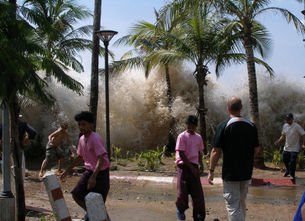
The tsunami caused by the December 26, 2004 earthquake strikes Ao Nang, Thailand.

The 2004 Indian Ocean earthquake, known by the scientific community as the Sumatra-Andaman earthquake, was an undersea earthquake that occurred at 00:58:53 UTC (07:58:53 local time) December 26, 2004, with an epicenter off the west coast of Sumatra, Indonesia. The earthquake triggered a series of devastating tsunamis that spread throughout the Indian Ocean, killing large numbers of people and inundating coastal communities across South and Southeast Asia, including parts of Indonesia, Sri Lanka, India, and Thailand. Although initial estimates have put the worldwide death toll at over 275,000 with thousands of others missing, recent analysis compiled lists a total of 229,866 persons lost, including 186,983 dead and 42,883 missing.[1] The figure excludes 400 to 600 people who are believed to have perished in Myanmar which is more than that government's official figure of only 61 dead.[2] This catastrophe is one of the deadliest disasters in modern history. The disaster is known in Asia and in the international media as the Asian Tsunami, and also called the Boxing Day Tsunami in Australia, Canada, New Zealand, and the United Kingdom as it took place on Boxing Day.

The magnitude of the earthquake was originally recorded as 9.0 on the Richter scale, but has been upgraded to between 9.1 and 9.3. At this magnitude, it is the second largest earthquake ever recorded on a seismograph. This earthquake was also reported to be the longest duration of faulting ever observed, lasting between 500 and 600 seconds, and it was large enough that it caused the entire planet to vibrate at least half an inch, or over a centimetre.[3] It also triggered earthquakes in other locations as far away as Alaska.[4]

The earthquake originated in the Indian Ocean just north of Simeulue island, off the western coast of northern Sumatra. The resulting tsunami devastated the shores of Indonesia, Sri Lanka, India, Thailand and other countries with waves up to 30 m (100 ft). It caused serious damage and deaths as far as the east coast of Africa, with the furthest recorded death due to the tsunami occurring at Port Elizabeth in South Africa, 8,000 km (5,000 mi) away from the epicenter.

The plight of the many affected people and countries prompted a widespread humanitarian response. In all, the worldwide community donated more than US$7 billion in humanitarian aid to those affected by the earthquake.
Contents
[hide]

* 1 Earthquake characteristics
o 1.1 Tectonic plates
o 1.2 Aftershocks and other earthquakes
o 1.3 Power of the earthquake
* 2 Tsunami characteristics
o 2.1 Signs and warnings
o 2.2 Retreat and rise cycle
* 3 Damage and casualties
o 3.1 Countries affected
o 3.2 Casualties in historical context
* 4 Human component in magnitude of damage
* 5 Humanitarian, economic and environmental impact
o 5.1 Economic impact
o 5.2 Environmental impact
o 5.3 Other effects
* 6 See also
* 7 Notes and references
* 8 External links
o 8.1 News collections
o 8.2 Photos and video
o 8.3 Scientific and educational

[edit]

Earthquake characteristics
Epicentre of the earthquake, just north of Simeulue Island
Enlarge
Epicentre of the earthquake, just north of Simeulue Island

The earthquake was initially reported as 9.0 on the Richter scale. In February 2005 some scientists revised the estimate of the magnitude to 9.3.[5] Although the Pacific Tsunami Warning Center has accepted these new numbers, the United States Geological Survey has so far not changed its original estimate of 9.0.

The hypocentre of the main earthquake was at 3.316°N, 95.854°E (3°19′N 95°51.24′E), approximately 160 km (100 mi) west of Sumatra, at a depth of 30 km (18.6 mi) below mean sea level (initially reported as 10 km). The earthquake itself (apart from the tsunami) was felt as far away as Bangladesh, India, Malaysia, Myanmar, Thailand, Singapore and the Maldives.

Indonesia lies between the Pacific Ring of Fire along the north-eastern islands adjacent to and including New Guinea and the Alpide belt along the south and west from Sumatra, Java, Bali, Flores, and Timor. The December 2004 earthquake actually occurred within the Alpide belt. [citation needed]

Since 1900 the only earthquakes recorded with a greater magnitude were the 1960 Great Chilean Earthquake (magnitude 9.5) and the 1964 Good Friday Earthquake in Prince William Sound (9.2). The only other recorded earthquake of magnitude 9.0 or greater was off Kamchatka, Russia, on November 4, 1952 (magnitude 9.0).[6] Each of these megathrust earthquakes also spawned tsunamis in the Pacific Ocean, but the death toll from these was significantly lower. The worst of these caused only a few thousand deaths, primarily because of the lower population density along the coasts near affected areas and the much greater distances to more populated coasts.

Other very large megathrust earthquakes occurred in 1868 (Peru, Nazca Plate and South American Plate); 1827 (Colombia, Nazca Plate and South American Plate); 1812 (Venezuela, Caribbean Plate and South American Plate) and 1700 (Cascadia Earthquake, western U.S. and Canada, Juan de Fuca Plate and North American Plate). These are all believed to have been of greater than magnitude 9, but no accurate measurements were available at the time.
[edit]

Tectonic plates

The earthquake was unusually large in geographical extent. An estimated 1,200 km (750 mi) of faultline slipped about 15 m (50 ft) along the subduction zone where the India Plate dives under the Burma Plate. The slip did not happen instantaneously but took place in two phases over a period of several minutes. Seismographic and acoustic data indicate that the first phase involved the formation of a rupture about 400 km (250 mi) long and 100 km (60 mi) wide, located 30 km (19 mi) beneath the sea bed—the longest rupture ever known to have been caused by an earthquake. The rupture proceeded at a speed of about 2.8 km/s (1.7 mi/s) or 10,000 km/h (6,300 mph), beginning off the coast of Aceh and proceeding north-westerly over a period of about 100 seconds. A pause of about another 100 seconds took place before the rupture continued northwards towards the Andaman and Nicobar Islands. However, the northern rupture occurred more slowly than in the south, at about 2.1 km/s (4,700 mph), continuing north for another five minutes to a plate boundary where the fault changes from subduction to strike-slip (the two plates push past one another in opposite directions). This reduced the speed of the water displacement and so reducing the size of the tsunami that hit the northern part of the Indian Ocean.[7]

The India Plate is part of the great Indo-Australian Plate, which underlies the Indian Ocean and Bay of Bengal, and is drifting north-east at an average of 6 cm/year (2 inches per year). The India Plate meets the Burma Plate (which is considered a portion of the great Eurasian Plate) at the Sunda Trench. At this point the India Plate subducts beneath the Burma Plate, which carries the Nicobar Islands, the Andaman Islands and northern Sumatra. The India Plate slips deeper and deeper beneath the Burma Plate until the increasing temperature and pressure drive volatiles out of the subducting plate. These volatiles rise into the crust above and trigger melt which exits the earth's crust through volcanoes in the form of a volcanic arc. The volcanic activity that results as the Indo-Australian plate subducts the Eurasian plate has created the Sunda Arc.

As well as the sideways movement between the plates, the sea bed is estimated to have risen by several metres, displacing an estimated 30 km³ (7 cu mi) of water and triggering devastating tsunami waves. The waves did not originate from a point source, as mistakenly depicted in some illustrations of their spread, but radiated outwards along the entire 1,200 km (750 mi) length of the rupture. This greatly increased the geographical area over which the waves were observed, reaching as far as Mexico, Chile and the Arctic. The raising of the sea bed significantly reduced the capacity of the Indian Ocean, producing a permanent rise in the global sea level by an estimated 0.1 mm.[8]
[edit]

Aftershocks and other earthquakes
Locations of initial earthquake and all aftershocks measuring greater than 4.0 from December 26, 2004-January 10, 2005. The initial quake is indicated by the large star in the lower right square of the grid. (Credit: USGS)
Enlarge
Locations of initial earthquake and all aftershocks measuring greater than 4.0 from December 26, 2004-January 10, 2005. The initial quake is indicated by the large star in the lower right square of the grid. (Credit: USGS)

Numerous aftershocks were reported off the Andaman Islands, the Nicobar Islands and the region of the original epicentre in the hours and days that followed. The largest aftershock of magnitude 8.7 was located off the Sumatran island of Nias.[9] A debate arose among seismologists over whether the 2005 Sumatra earthquake should be considered an aftershock of the December 2004 event or a "triggered earthquake" (an earthquake brought about by a previous earthquake),[10] as it was larger than typical aftershocks but on the same fault. Other aftershocks of up to magnitude 6.6 continued to shake the region daily for up to three or four months. As well as continuing aftershocks, the energy released by the original earthquake continued to make its presence felt well after the event. A week after the earthquake, its reverberations could still be measured, providing valuable scientific data about the Earth's interior.

The 2004 Indian Ocean earthquake came just three days after a magnitude 8.1 earthquake in an uninhabited region west of New Zealand's sub-Antarctic Auckland Islands, and north of Australia's Macquarie Island. This is unusual, since earthquakes of magnitude 8 or more occur only about once per year on average.[11] Some seismologists have speculated about a connection between these two earthquakes, saying that the former one might have been a catalyst to the Indian Ocean earthquake, as the two earthquakes happened on opposite sides of the Indo-Australian Plate. However, the U.S. Geological Survey sees no evidence of a causal relationship in this incident. Coincidentally, the earthquake struck almost exactly one year (to the hour) after a 6.6 magnitude earthquake killed an estimated 30,000 people in the city of Bam in Iran on December 26, 2003.[12]

An earthquake of magnitude 8.7 was reported shortly at 16:09:37 UTC (23:09:37 local time) on March 28, 2005, approximately at the same location (see 2005 Sumatran earthquake). It was likely a very large aftershock of the original earthquake. This earthquake had strong aftershocks of its own, including magnitude 6.0 and 6.1 earthquakes. At 8.7 it ranks as the 7th largest earthquake since 1900. A 6.7 magnitude earthquake struck on April 10, 2005, at 10:29 UTC (17:29 local time) about 120 km (75 mi) south-west of the city of Padang.[13][14]

Some scientists confirm that the December earthquake had activated Leuser Mountain, a volcano in Aceh province along the same range of peaks as Talang, while the 2005 Sumatran earthquake had sparked activity in Lake Toba, an ancient crater in Sumatra.[15] Geologists say that the eruption of Mount Talang in April 2005 is connected to the December earthquake.[16]
[edit]

Power of the earthquake

The total energy released by the 2004 Indian Ocean earthquake has been estimated as 3.35 exajoules (3.35×10¹⁸ joules). This is equivalent to over 930 terawatt hours, 0.8 gigatons of TNT, or about as much energy as is used in the United States in 11 days. However, the most reliable seismic energy release estimate, as of September 30, 2005, is 1.1×10¹⁸ joules. This corresponds to about 0.25 gigatons of TNT. The earthquake is estimated to have resulted in an oscillation of the Earth's surface of about 20–30 cm (8–12 in), equivalent to the effect of the tidal forces caused by the Sun and Moon. The shock waves of the earthquake were felt across the planet; as far away as the U.S. state of Oklahoma, where vertical movements of 3 mm (0.12 in) were recorded.[17] The entire Earth's surface is estimated to have moved vertically by up to 1 cm.

The shift of mass and the massive release of energy very slightly altered the Earth's rotation. The exact amount is yet undetermined, but theoretical models suggest the earthquake shortened the length of a day by 2.68 microseconds (2.68 µs, or about one billionth of the length of a day), due to a decrease in the oblateness of the Earth.[18] It also caused the Earth to minutely "wobble" on its axis by up to 2.5 cm (1 in) in the direction of 145° east longitude,[19] or perhaps by up to 5 or 6 cm (2.0 to 2.4 in).[20] However, because of tidal effects of the Moon, the length of a day increases at an average of 15 µs per year, so any rotational change due to the earthquake will be lost quickly. Similarly, the natural Chandler wobble of the Earth can be up to 15 m (50 ft).

More spectacularly, there was 10 m (33 ft) movement laterally and 4–5 m (13–16 ft) vertically along the fault line. Early speculation was that some of the smaller islands south-west of Sumatra, which is on the Burma Plate (the southern regions are on the Sunda Plate), may have moved south-west by up to 20 m (66 ft), and some early estimates said up to 36 m (118 ft). However, more accurate data released, more than a month following the earthquake, present a more manageable figure of 20 cm (7.9 in).[21] Since movement was vertical as well as lateral, some coastal areas may have been moved to below sea level. The Andaman and Nicobar Islands appear to have shifted south-west by around 1.25 m (4.1 ft) and to have sunk by 1 m (3.28 ft).[22]

In February 2005 the Royal Navy vessel HMS Scott surveyed the seabed around the earthquake zone, which varies in depth between 1,000 m (3,300 ft) and 5,000 m (16,500 ft) west of Sumatra. The survey, conducted using a high-resolution, multi-beam sonar system, revealed that the earthquake had made a huge impact on the topography of the seabed. Previous activity on the fault over geological periods of time had created large thrust ridges, about 1,500 m high, which collapsed in places during the earthquake to produce large landslides several kilometres across. One landslide consisted of a single block of material some 100 m (300 ft) high and 2 km (1.25 mi) long. The force of the displaced water was such that individual blocks of rock, massing millions of tons apiece, were dragged as much as 10 km (7 mi) across the seabed. An oceanic trench several kilometres wide was exposed in the earthquake zone.[23]

By a beneficial and remarkable coincidence, the TOPEX/Poseidon and Jason 1 satellites happened to pass over the tsunami as it was crossing the ocean.[24] These satellites carry radars that measure precisely the height of the water surface; anomalies of the order of 50 cm (20 in) were measured. Measurements from these satellites may prove invaluable for the understanding of the earthquake and tsunami.[25] Unlike data from tide gauges installed on shores, measurements obtained in the middle of the ocean can be used for computing the parameters of the source earthquake without having to compensate for complex effects close to the coast. Inversion of this height data may help adjust the parameters for the source earthquake.

Taken from:2004 Indian Ocean Earthquake


Nuclear Sub Crushed
Updated: 11:41, Friday January 28, 2005

The first pictures of an American nuclear submarine that crashed into an undersea mountain have been released.

The USS San Francisco was travelling at around 30 miles an hour when it ran aground 350 miles off the coast of Guam last month.

Pictures released by the US Navy show the front of the submarine completely cut off.

One sailor was killed and 23 others seriously injured.

A team of navy experts is preparing to assess the damage to determine whether the warship can be repaired and returned to sea.
Advertisement

Satellite images of the area where the submarine crashed show a wedge-shaped mountain that stretches across more than a mile of desolate expanse in the South Pacific.

Military officials told the New York Times that the mountain, which rises within 100 feet of the surface, was not on the navigation charts.

The satellite pictures suggest that the mountain is part of a larger range of undersea volcanoes and reefs.

Experts say that had the sub's active sonar system been switched on it may have been able to detect the mountain.

But US submarines usually have it switched off because when it detects anything, it makes a loud pinging noise and can give away the sub's location to potential enemies.

Taken from: Nuclear Sub Crashed into Underground Volcanic Mountain

Thursday, July 20, 2006

Afghanistan .......


The Golden Crescent Drug Triangle


The history of the drug trade in Central Asia is intimately related to the CIA's covert operations. Prior to the Soviet-Afghan war, opium production in Afghanistan and Pakistan was directed to small regional markets. There was no local production of heroin. 11 In this regard, Alfred McCoy's study confirms that within two years of the onslaught of the CIA operation in Afghanistan, "the Pakistan-Afghanistan borderlands became the world's top heroin producer, supplying 60 percent of U.S. demand. In Pakistan, the heroin-addict population went from near zero in 1979... to 1.2 million by 1985 -- a much steeper rise than in any other nation":12

CIA assets again controlled this heroin trade. As the Mujahideen guerrillas seized territory inside Afghanistan, they ordered peasants to plant opium as a revolutionary tax. Across the border in Pakistan, Afghan leaders and local syndicates under the protection of Pakistan Intelligence operated hundreds of heroin laboratories. During this decade of wide-open drug-dealing, the U.S. Drug Enforcement Agency in Islamabad failed to instigate major seizures or arrests ... U.S. officials had refused to investigate charges of heroin dealing by its Afghan allies `because U.S. narcotics policy in Afghanistan has been subordinated to the war against Soviet influence there.' In 1995, the former CIA director of the Afghan operation, Charles Cogan, admitted the CIA had indeed sacrificed the drug war to fight the Cold War. `Our main mission was to do as much damage as possible to the Soviets. We didn't really have the resources or the time to devote to an investigation of the drug trade,'... `I don't think that we need to apologize for this. Every situation has its fallout.... There was fallout in terms of drugs, yes. But the main objective was accomplished. The Soviets left Afghanistan.'13


Taken from: The Golden Crescent Drug Triangle


UK soldiers killed in poppy growing area of Afghanistan [video report]

Monday July 3, 2006
By Tom Coghlan

Two British soldiers have been killed in Afghanistan, as Western officials in the country admitted yesterday that despite a US$1 billion ($1.6 billion) a year campaign to curb it the country is facing its largest ever poppy harvest.

The new British deaths, the fourth and fifth in three weeks, come as Western military commanders and counter-narcotics officials appear increasingly at odds over how to approach the drugs problem in the south of the country, with military commanders fearful that drug eradication is acting as a recruiting sergeant for the Taleban.

"The trends indicate that the area of cultivation will be considerably higher than in 2004," said a representative of the United Nations office on Drugs and Crime, which will publish its annual report of the Afghan opium harvest in August.

2004 saw the largest ever area of poppy cultivation in Afghanistan of around 130,000 hectares.

Poor growing conditions that year mean that this year's harvest, with better conditions across the country, will produce the largest tonnage of opium ever.

Afghanistan is single-handedly responsible for around 87 per cent of the world's opium and more than 90 per cent of the heroin consumed on British streets.

In 2005 the Karzai government announced a "jihad" on poppy production, backed by the near $1billion international campaign, which is led by Britain.

It produced a 21 per cent drop in the area of cultivation but those gains have now been wiped out.

Around a third of this year's harvest has come from a single province, Helmand, where 3300 British troops are heavily engaged against Taleban rebels.

Some military commanders now argue that eradication operations against poppy cultivation in the south should be suspended for a year or more.

"We may have to say to the farmer we are not yet ready to provide an alternative livelihood," one senior NATO officer told the Independent.

But counter-narcotics officials contend that a suspension of eradication produce a further surge in poppy production and help fund elements with a vested interest in maintaining the current instability.

The Afghan drugs economy is currently valued at US$2.7 billion, equivalent to more than 50 per cent of the legal economy.

By contrast the Afghan government managed to generate legal revenues, outside of foreign aid, totalling only US$330 million last year.

Farmers in the south claim that in the absence of any other economic activity, poppy cultivation and high wages paid by the Taleban to fight for them offer the only sources of income to huge numbers of unemployed young men.

Poppy cultivation, they say, is the only means of wealth creation without capital because the smugglers pay in advance.

In Washington there is increasing pressure for a more radical approach to the drugs problem with the threat of aerial eradication being held up as the ultimate sanction if the softer methods favoured by the British and Afghan governments don't work.

Western sources have told the Independent that US counter-narcotics teams are exploring the possibility of using a form of the defoliant Agent Orange.

The United Nations remains completely opposed to the move.


Taken from: Ukk soldeirs killed in poppy growing area of Afghanistan


Opium Production in Afghanistan has been a huge problem for the country since the downfall of the Taliban in 2001

The CIA estimates that one-third of Afghanistan's GDP comes from opium export, although the Asian Development Bank states a lower figure, namely $2.5 billion (12% of the GDP). At any rate, this is not only one of Kabul's most serious policy and law-enforcement challenges[1], but also one of the world's most serious problems.

The problem began with the Soviet invasion in 1979-80. As the government began to lose control of provinces, "warlordism" flourished and with it opium production as regional commanders searched for ways to generate money to purchase weapons, according to the UN.[2] (At this time the West was pursuing an "arms-length" supporting strategy of the Afghan freedom-fighters or Mujahidin, the main purpose being to cripple the USSR slowly into withdrawal rather than a quick and decisive overthrow).

When the Red Army was forced to withdraw in 1989, a power vacuum was created. Various Mujahidin factions started fighting against each other for power. With the discontinuation of Western support, they resorted ever more to poppy cultivation to finance their military existence.

Some local opium dealers, looking for a safe operational hub, joined forces with the more fanatic sections of the Mujahidin supported by Arab extremists like Osama bin Laden as well as the Pakistani secret intelligence service ISI to form the Taliban movement towards the end of 1994;[3] see also BBC report here [4].

The Taliban, having taken control of 90% of the country, actively encouraged poppy cultivation. With this, they not only fulfilled their promises and obligations to their partners - the regional mafia - but also increased their own desperately needed income by imposing taxes on local farmers and through subsidies by international organised crime gangs. According to the above UN source, Afghanistan saw a bumper opium crop of 4,600 million tonnes in 1999, which was the height of the Taliban rule in Afghanistan.

According to a Swiss security publication, 'SicherheitsForum' (April 2006, pp:56-57), this resulted in supply exceeding demand and a drop in the high-street price of heroin and morphine in the West, endangering the profitability of European drug smugglers. To stop this trend, Westerns international drug barons demanded a reduction in supply. The regional mafia instructed the Taliban accordingly. It is alleged in the report that, Obeying his financiers, Mullah Omar (the Taliban leader) issued a ban on poppy cultivation "on religious grounds", resulting in one of the lowest opium production levels in 2002. [5]

The news was received positively by the international community as a sign of “reform” and compromise by the Taliban. The topic is still (May 2006) benchmarked with the failed efforts of Afghanistan’s current government during the tenure of which opium production has increased again. If 'SicherheitsForum' is correct, it is ironic how collaboration between international terrorism and organised crime could cause some global media to talk positively about the Taliban.

Following the US-led coalition war that led to the defeat of the Taliban in November 2001, essentially collapsing the economy, the scarcity of other sources of revenue forced many of the country's farmers to resort back to growing opium for export.(1,300 km² in 2004 according to the United Nations Office on Drugs and Crime). Afghanistan is presently the greatest illicit opium producer in the world, before Burma (Myanmar), part of the so-called "Golden Triangle".

The main obstacle to eradicating poppy cultivation in Afghanistan is the US forces' need for the warlords and their forces in hunting terrorists. In the absence of Taliban, the warlords largely control the opium trade but are also highly useful to the US forces in scouting, providing local intelligence, keeping their own territories clean from Al-Qaeda and Taliban insurgents, and even taking part in military operations.

Taken from: Opium Production in Afghanistan

Bin Laden and His CIA ties


Bin Laden comes home to roost

His CIA ties are only the beginning of a woeful story

By Michael Moran MSNBC
NEW YORK, Aug. 24, 1998

— At the CIA, it happens often enough to have a code name: Blowback. Simply defined, this is the term that describes an agent, an operative or an operation that has turned on its creators. Osama bin Laden, our new public enemy Number 1, is the personification of blowback. And the fact that he is viewed as a hero by millions in the Islamic world proves again the old adage: Reap what you sow.

Taken from: Bin Laden Comes Home To Roost


Who Is Osama Bin Laden?
by Michel Chossudovsky
Professor of Economics, University of Ottawa

Centre for Research on Globalisation (CRG), Montréal
Posted at globalresearch.ca 12 September 2001

Article également disponible en français.
Artículo también disponible en español.

Michel Chossudovsky's new book on 9/11 entitled War and Globalisation, The Truth behind September 11 will be launched on October 4.

For details or to order online click here

A few hours after the terrorist attacks on the World Trade Centre and the Pentagon, the Bush administration concluded without supporting evidence, that "Osama bin Laden and his al-Qaeda organisation were prime suspects". CIA Director George Tenet stated that bin Laden has the capacity to plan ``multiple attacks with little or no warning.'' Secretary of State Colin Powell called the attacks "an act of war" and President Bush confirmed in an evening televised address to the Nation that he would "make no distinction between the terrorists who committed these acts and those who harbor them". Former CIA Director James Woolsey pointed his finger at "state sponsorship," implying the complicity of one or more foreign governments. In the words of former National Security Adviser, Lawrence Eagleburger, "I think we will show when we get attacked like this, we are terrible in our strength and in our retribution."

Meanwhile, parroting official statements, the Western media mantra has approved the launching of "punitive actions" directed against civilian targets in the Middle East. In the words of William Saffire writing in the New York Times: "When we reasonably determine our attackers' bases and camps, we must pulverize them -- minimizing but accepting the risk of collateral damage" -- and act overtly or covertly to destabilize terror's national hosts".

The following text outlines the history of Osama Bin Laden and the links of the Islamic "Jihad" to the formulation of US foreign policy during the Cold War and its aftermath.

Prime suspect in the New York and Washington terrorists attacks, branded by the FBI as an "international terrorist" for his role in the African US embassy bombings, Saudi born Osama bin Laden was recruited during the Soviet-Afghan war "ironically under the auspices of the CIA, to fight Soviet invaders". 1

In 1979 "the largest covert operation in the history of the CIA" was launched in response to the Soviet invasion of Afghanistan in support of the pro-Communist government of Babrak Kamal.2:

With the active encouragement of the CIA and Pakistan's ISI [Inter Services Intelligence], who wanted to turn the Afghan jihad into a global war waged by all Muslim states against the Soviet Union, some 35,000 Muslim radicals from 40 Islamic countries joined Afghanistan's fight between 1982 and 1992. Tens of thousands more came to study in Pakistani madrasahs. Eventually more than 100,000 foreign Muslim radicals were directly influenced by the Afghan jihad.3

The Islamic "jihad" was supported by the United States and Saudi Arabia with a significant part of the funding generated from the Golden Crescent drug trade:

In March 1985, President Reagan signed National Security Decision Directive 166,...[which] authorize[d] stepped-up covert military aid to the mujahideen, and it made clear that the secret Afghan war had a new goal: to defeat Soviet troops in Afghanistan through covert action and encourage a Soviet withdrawal. The new covert U.S. assistance began with a dramatic increase in arms supplies -- a steady rise to 65,000 tons annually by 1987, ... as well as a "ceaseless stream" of CIA and Pentagon specialists who traveled to the secret headquarters of Pakistan's ISI on the main road near Rawalpindi, Pakistan. There the CIA specialists met with Pakistani intelligence officers to help plan operations for the Afghan rebels.4

The Central Intelligence Agency (CIA) using Pakistan's military Inter-Services Intelligence (ISI) played a key role in training the Mujahideen. In turn, the CIA sponsored guerrilla training was integrated with the teachings of Islam:

Predominant themes were that Islam was a complete socio-political ideology, that holy Islam was being violated by the atheistic Soviet troops, and that the Islamic people of Afghanistan should reassert their independence by overthrowing the leftist Afghan regime propped up by Moscow.5

Pakistan's Intelligence Apparatus

Pakistan's ISI was used as a "go-between". The CIA covert support to the "jihad" operated indirectly through the Pakistani ISI, --i.e. the CIA did not channel its support directly to the Mujahideen. In other words, for these covert operations to be "successful", Washington was careful not to reveal the ultimate objective of the "jihad", which consisted in destroying the Soviet Union.

In the words of CIA's Milton Beardman "We didn't train Arabs". Yet according to Abdel Monam Saidali, of the Al-aram Center for Strategic Studies in Cairo, bin Laden and the "Afghan Arabs" had been imparted "with very sophisticated types of training that was allowed to them by the CIA" 6

CIA's Beardman confirmed, in this regard, that Osama bin Laden was not aware of the role he was playing on behalf of Washington. In the words of bin Laden (quoted by Beardman): "neither I, nor my brothers saw evidence of American help". 7

Motivated by nationalism and religious fervor, the Islamic warriors were unaware that they were fighting the Soviet Army on behalf of Uncle Sam. While there were contacts at the upper levels of the intelligence hierarchy, Islamic rebel leaders in theatre had no contacts with Washington or the CIA.

With CIA backing and the funneling of massive amounts of US military aid, the Pakistani ISI had developed into a "parallel structure wielding enormous power over all aspects of government". 8 The ISI had a staff composed of military and intelligence officers, bureaucrats, undercover agents and informers, estimated at 150,000. 9

Meanwhile, CIA operations had also reinforced the Pakistani military regime led by General Zia Ul Haq:

'Relations between the CIA and the ISI [Pakistan's military intelligence] had grown increasingly warm following [General] Zia's ouster of Bhutto and the advent of the military regime,'... During most of the Afghan war, Pakistan was more aggressively anti-Soviet than even the United States. Soon after the Soviet military invaded Afghanistan in 1980, Zia [ul Haq] sent his ISI chief to destabilize the Soviet Central Asian states. The CIA only agreed to this plan in October 1984.... `the CIA was more cautious than the Pakistanis.' Both Pakistan and the United States took the line of deception on Afghanistan with a public posture of negotiating a settlement while privately agreeing that military escalation was the best course.10


Concluding Remarks

Since the Cold War era, Washington has consciously supported Osama bin Laden, while at same time placing him on the FBI's "most wanted list" as the World's foremost terrorist.

While the Mujahideen are busy fighting America's war in the Balkans and the former Soviet Union, the FBI --operating as a US based Police Force- is waging a domestic war against terrorism, operating in some respects independently of the CIA which has --since the Soviet-Afghan war-- supported international terrorism through its covert operations.

In a cruel irony, while the Islamic jihad --featured by the Bush Adminstration as "a threat to America"-- is blamed for the terrorist assaults on the World Trade Centre and the Pentagon, these same Islamic organisations constitute a key instrument of US military-intelligence operations in the Balkans and the former Soviet Union.

In the wake of the terrorist attacks in New York and Washington, the truth must prevail to prevent the Bush Adminstration together with its NATO partners from embarking upon a military adventure which threatens the future of humanity.


Taken from : Who is Osama Bin Laden?

Some home truths......


Some home truths....


Blair / Bush overheard conversation at G8 summit ( An Unguarded Moment )

An excerpt from a piece about the arms company: The Carlyle Group

William Conway, managing director and co-founder of the Carlyle Group, was talking recently about the media coverage of his bank and the cast of ex-Presidents and former officials, including George H.W. Bush, James Baker III and Frank Carlucci, on its payroll. "One of the words that has recently cropped up as an adjective around us--and I love this adjective--is the 'secretive' Carlyle Group," he said in an interview in his offices overlooking Pennsylvania Avenue in downtown Washington. "What's the secret? I don't think we have many secrets. The reality is, we're a group of businessmen who have made an enormous amount of money for our investors by making good investments over the past fifteen years."

To give Conway his due, Carlyle has done exceedingly well for the 435 pension funds, banks and investment funds--40 percent from overseas--that have entrusted their money to one of the world's largest private equity funds. Under the leadership of Carlucci, a former CIA deputy director who was Defense Secretary in the Reagan Administration, Carlyle has become the nation's eleventh-largest defense contractor, a major arms exporter to Saudi Arabia and Turkey, one of the biggest foreign investors in South Korea and Taiwan, and a key player in global telecommunications, wireless, real estate and healthcare markets. Since 1987 it has invested $6.4 billion in 233 transactions, with a rate of return of 36 percent on its completed investments. Carlyle currently has $12.5 billion invested.

"Their basic nature is not to be a long-term investor but buy low and sell high," said Philip Finnegan, an analyst with the Teal Group, a Beltway company that tracks the aerospace industry. "They always look for an exit strategy in whatever they buy. They have a sense of the stability of the business because of the accumulated expertise they have."


HOW THE CARLYSLE SYSTEM WORKS

A good analogy to the Carlyle system is a Japanese tradition known as amakudari (literally, "descent from heaven"). Under this system, senior officials from Japanese ministries retire, only to be instantly hired as senior advisers by the companies and industry groups they were paid to regulate. "What we're really talking about is a systematic merging of the private and public sectors to the point where the distinctions get lost," said Chalmers Johnson, president of the Japan Policy Research Institute and author of two acclaimed books on the Japanese system of governance. "The Carlyle Group is a perfect example. It's the use of former government officials for their access to government bureaucracies to determine contractual relations. It's inside knowledge--knowing where the government is going to spend money and then investing in it."
Taken from: Crony Capitalism Goes Global

Another interesting documentary to watch is :Exposed : The Carlyle Group


There is of course another way of explaining the current Israel / Lebanon Standoff :

Hezbollah Finances: Funding the Party of God

Iran: State Sponsorship of Hezbollah


Iran is believed to fund Hezbollah to the tune of at least $100 million per year. Recently, Western diplomats and analysts in Lebanon estimated Hezbollah receives closer to $200 million a year from Iran. (10) The increase is likely due to Iran’s keen interest in undermining prospects for Israeli-Palestinian peace (and, in general, further destabilizing the Israeli-Palestinian conflict), and Hezbollah’s growing role as Iran’s proxy to achieve this goal. Hezbollah success in funding and training Palestinian groups—not just the Iran’s interest in it—may well explain the increase in funding since Iran is known to employ a results-oriented approach to determining the level of funding it is willing to provide terrorist groups. As a U.S. court noted in Weinstein v. Iran, the period of 1995-1996 “was a peak period for Iranian economic support of Hamas because Iran typically paid for results, and Hamas was providing results by committing numerous bus bombings such as the one on February 25, 1996.” (11) Iranian funding to terrorist groups like Hamas and Islamic Jihad (most often funneled via Hezbollah) increases when they carry out successful attacks and decreases when they fail, are thwarted or are postponed due to ceasefires or other political considerations.

Some of this financial support comes in the form of cash funds, while much is believed to come in the form of material goods such as weapons. Iranian cargo planes deliver sophisticated weaponry, from rockets to small arms, to Hezbollah in regular flights to Damascus from Tehran. These weapons are offloaded in Syria and trucked to Hezbollah camps in Lebanon’s Beka’a Valley. In the wake of the death of Palestinian leader Yasser Arafat, Hezbollah reportedly received an additional $22 million from Iranian intelligence to support Palestinian terrorist groups and foment instability. (12)

Iran also funnels money to Hezbollah through purportedly private charities closely affiliated with the revolutionary elite led by Supreme Leader Khomeoni that controls such key Iranian institutions as the intelligence and security services, the judiciary, and the revolutionary council. Mohammed Raad, leader of Hezbollah’s “Loyalty to the Resistance Bloc” in the Lebanese parliament, readily accedes that the group receives funds from Iran, but maintains these are only for “health care, education and support of war widows.” (13)

Beyond this tangible support, however, Iran also provides Hezbollah less quantifiable financial support through the training and logistical operation support it provides the group. Indeed, the most significant modus operandi that runs through all Hezbollah global activities—financial, logistical and operational—is that at some level all Hezbollah networks are overseen by and are in contact with senior Hezbollah and/or Iranian officials.

For example, Hezbollah operatives in Charlotte, North Carolina, responded directly to Sheikh Abbas Haraki, a senior Hezbollah military commander in South Beirut. At the same time, Hezbolllah procurement agents in Canada who coordinated with the Charlotte cell worked directly with Haj Hasan Hilu Laqis, Hezbollah’s chief procurement officer who operates closely with Iranian intelligence. (14)

In Southeast Asia, members of the Hezbollah network behind a failed truck-bombing targeting the Israeli embassy in Bangkok in 1994, as well as a series of other terrorist plots in the region throughout the 1990s, were intimately tied to Iranian intelligence agents. Comprised almost entirely of local sunni Muslims, the network was led by Pandu Yudhawitna who was himself recruited by Iranian intelligence officers stationed in Malaysia in the early 1980s. (15)

Other examples include senior Hezbollah operatives and Iranian agents involved in the 1996 Khobar Towers bombing in Saudi Arabia, in Hezbollah's efforts to smuggle weapons to Palestinian terrorists through Jordan since 2000, in Hezbollah operations in South America (including the 1992 and 1994 bombings), and in the recruitment of Shi’a students in Uganda. (16) Throughout these and many other cases, a key common thread is the direct contact each cell maintains to senior Hezbollah and/or Iranian intelligence operatives.

Perhaps the best documented example of the operational relationship Iran maintains with Hezbollah is Tehran’s role in the Jewish community center (Asociacion Mutual Israelita Argentina , or AMIA) bombing. According to Abdolghassem Mesbahi, a high-level Iranian defector, the decision to bomb the AMIA building was made at a meeting of senior Iranian decision makers on August 14, 1993. (17) The meeting reportedly included the Supreme Leader Ali Hoseini Khamenei, former President Ali Akbar Hashemi, Rafsanjani, former Foreign Minister Ali Akbar Vlayati, the Head of Intelligence and Security in Khamenei’s Bureau, Mohammed Hjazi, former Intelligence Minister Ali Fallahian, and Iranian secret service agent Mohsen Rabbani. (18) According to Argentinean court documents, the Argentinean intelligence service (SIDE) believes that Khameini issued a fatwa concerning AMIA. This fatwa was then handed down from Fallahian to Imad Mughniyeh, the “special operations” chief of Hezbollah. Mughniyeh worked in conjunction with Rabbani, who was able to help orchestrate the plan for the bombing clandestinely under the guise of heading the Iranian Cultural Bureau at the Iranian Embassy in Buenos Aires. (19) Rabbani attempted to buy a Renault-Trafic model van, the same model that was used in the bombing, and is suspected of being involved with several commercial activities through fictitious or undercover enterprises on behalf of Iranian intelligence. (20) Investigators also uncovered records of phone calls between the Iranian embassy in Buenos Aires and suspected Hezbollah operatives in the triborder area who operated out of a mosque and a travel agency there. (21)

According to expert opinions included in the Argentinean court document, it is well known that Hezbollah operatives often receive training in Iran. (22) In addition, Hezbollah prefers outside operatives to local contacts when running its major operations in other countries. These operatives generally are more trustworthy and better trained. (23) The terrorists that conducted the AMIA bombing would have had greater difficulty operating without the operational support of Iran, which reportedly included the bribing of then Argentinean President Carlos Menem with a payment of $10 million dollars to keep Iran’s involvement quiet. (24)

Iran has also supported Hezbollah’s involvement in the Palestinian-Israeli conflict and support of Palestinian militants. U.S. officials contend that, shortly after Palestinian violence erupted in September 2000, Iran assigned Imad Mughniyeh, Hezbollah's international operations commander, to help Palestinian militant groups, specifically Hamas and Palestinian Islamic Jihad (PIJ). (25) According to a former Clinton administration official, "Mugniyeh got orders from Tehran to work with Hamas." (26) In fact, in the March 27, 2002, "Passover massacre" suicide bombing, Hamas relied on the guidance of a Hezbollah expert to build an extra-potent bomb. (27)

Iran has also demonstrated consistent financial and logistical support of Hezbollah and other terrorist groups by establishing terrorist training programs and camps. As of August 2002, Iran was reported to have financed and established terrorist training camps in the Syrian-controlled Beka'a Valley to train Hezbollah, Hamas, PIJ and PFLP-GC terrorists to use rockets such as the short range Fajr-5 missile and the SA-7 anti-aircraft rocket. (28) The camps, including one in Khuraj near the Syrian border, were reported to be under the command of Iranian Republican Guard Corps (IRGC) General Ali Reza Tamzar, commander of IRGC activity in the Beka'a Valley. (29) According to a "Western intelligence agency" report, which puts the cost of the Iranian program at $50 million, Tamzar's IRGC detachment also trains the Lebanese and Palestinian terrorists to carry out "underwater suicide operations." (30) The Iranian terrorist training program was the result of a secret meeting held in the Tehran suburb of Darjah on June 1, 2002, in advance of a two-day conference in support of the Palestinian Intifada held in Tehran on June 1-2, 2002.

Beyond training and arming Hezbollah, Iran bankrolls the group’s well-oiled propaganda machine as well. Al-Manar is the official television mouthpiece of Hezbollah. Called the “station of resistance”—it serves as Hezbollah’s tool to reach the entire Arab Muslim world to disseminate propaganda and promote terrorist activity.

At the time of al-Manar’s founding in 1991, the station reportedly received seed money from Iran (31) and had a running budget of $1 million. By 2002 its annual budget had grown to approximately $15 million. (32) Middle East analysts and journalists maintain that most of this funding comes from Iran. (33)

Avi Jorisch, author of Beacon of Hatred: Inside Hezbollah’s al-Manar Television, writes that “Iran provides an estimated $100-200 million per year to Hezbollah, which in turn transfers money to al-Manar, making Iranian funding of the station indirect.” (34) This was confirmed by former al-Manar program director Sheikh Nasir al-Akhdar who asserted that al-Manar receives a large portion of its budget through subsidies offered by Hezbollah. (35)

Taken from : Hezbollah Finances : Funding The Party of God


What the politicians want us to forget about:

The Jerusalem Post reported on April 9, 1998 that Iran had purchased four tactical nuclear weapons from Russian smugglers for $25 million in the early 1990s, that the weapons had been obtained from Kazakhstan in 1991, and that Argentine technicians were helping to activate the weapon.

* It quoted what it claimed was an Iranian report, dated December 26, 1991, of a meeting between Brigadier General Rahim Safavi, the Deputy Commander of the Revolutionary Guards and Reza Amrohalli, then head of the Iranian atomic energy organization.
* It also quoted a second document -- dated January 2, 1992 --- saying the Iranians were awaiting the arrival of Russian technicians to show them how to disarm the protection systems that would otherwise inactivate the weapons if anyone attempted to use them.
* The documents implied the weapons were flawed by did not indicate whether Iran had succeeded in activating them.
* The US intelligence community denied any evidence that such a transfer had taken place.

Taken from : The Green Party of Iran Webpage


So At the moment is it a) The Continuation of the Cold War By Russia using third parties (Iran)

or b) is it Merely an Arms Dealer stirring up trouble between different countries to make a fortune for its Pension Funds?


I'm just supplying the facts - What's happening ? THATS FOR YOU TO DECIDE